Remote interview setup: how to look and sound professional on Zoom
Setting Up Your Professional Interview Space
Setting Up Your Professional Interview Space
Choosing and Preparing Your Interview Location
Your interview location sets the foundation for a professional virtual impression. Start by selecting a quiet, private space where you won't be interrupted—ideally a room with a door you can close. Look for areas with good natural light [9], as it provides the most flattering illumination for video calls.
Position yourself against a neutral, uncluttered background that won't compete for attention. Research shows that information visible in your background can cause bias in performance ratings [7], so choose carefully. A plain wall or simple bookshelf works well, while busy patterns or personal items may distract interviewers.
Test your chosen location at the same time of day as your scheduled interview to evaluate lighting conditions. Morning light differs dramatically from afternoon shadows, and you want to avoid surprises during the actual call.
Finally, ensure a stable internet connection by positioning yourself close to your router or using an ethernet cable. In one study, 66.7% of live video respondents used computers [4], which typically offer more reliable connectivity than mobile devices for professional interviews.
Optimizing Camera Position and Framing
Once your technical setup is ready, focus on positioning yourself effectively within the frame. Place your camera at eye level to create natural eye contact with interviewers and avoid the unflattering angles that come from looking up or down at the lens. This positioning conveys confidence and professionalism throughout your conversation.
Frame yourself from mid-chest up, leaving a small amount of headroom above your head—roughly the width of two fingers between the top of your head and the frame's edge. This creates balanced, professional composition without feeling cramped or distant. Position yourself centered in the frame with your face well-lit and clearly visible to ensure interviewers can read your expressions and engage naturally with you.
Maintain approximately arm's length distance from your camera. This creates appropriate professional space while keeping you as the clear focal point. If you're too close, you'll appear overwhelming; too far, and you'll seem disconnected. This optimal distance helps you project confidence while maintaining the personal connection essential for successful remote interviews.
Lighting Your Face for Maximum Impact
Proper lighting transforms how you appear on camera, directly influencing the interviewer's first impression. Natural light from a window facing you provides the most flattering illumination, creating soft, even tones across your face. Position yourself so this light falls directly on you rather than from the side, which can create unflattering shadows.
Supplement natural light with a desk lamp or ring light positioned at eye level. This additional source fills in any remaining shadows under your eyes, nose, and chin, ensuring your facial expressions remain clearly visible throughout the conversation. Ring lights are particularly effective because they provide uniform illumination from all angles.
Never sit with a window directly behind you. This backlighting creates a silhouette effect, obscuring your features and forcing the camera to compensate by darkening your face even further. Your interviewer should see you clearly, not a shadowy outline.
Before any interview, test your lighting setup using your computer's camera preview. Adjust lamp angles and your seating position until you achieve clear, shadow-free visibility. This preparation ensures you'll project confidence and professionalism when it matters most.
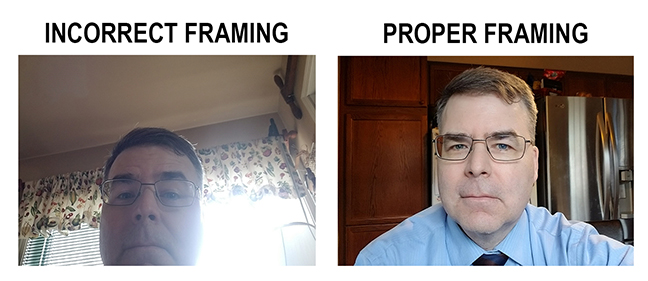
A side-by-side comparison of incorrect versus proper webcam framing for professional video calls.
Mastering Audio Quality and Technical Performance
Selecting and Testing Audio Equipment
Clear audio quality can make or break your remote interview impression. While laptop microphones might seem adequate, investing in a dedicated external microphone or quality headset dramatically improves voice clarity and demonstrates professionalism. USB condenser microphones offer excellent sound capture without requiring complex audio interfaces.
Before your interview, leverage Zoom's built-in audio test feature to verify your equipment works properly. This simple check helps identify issues with volume levels, background noise, or connectivity problems while you still have time to adjust. Navigate to Zoom's audio settings and click "Test Speaker" and "Test Mic" to hear how you'll sound to interviewers.
Proper microphone positioning matters significantly. Place your microphone 6-8 inches from your mouth at a slight angle to optimize sound capture while minimizing breathing sounds and plosives. This distance provides clear vocal reproduction without distortion.
Always use headphones during the conversation to prevent echo and audio feedback. When your microphone picks up sound from your speakers, it creates a disruptive loop that frustrates interviewers and undermines your professional presentation.
Configuring Zoom Settings for Optimal Performance
Beyond hardware considerations, your Zoom software configuration significantly impacts interview quality. Enable HD video in your settings if your internet connection consistently delivers at least 3.5 Mbps upload speed. This enhancement ensures interviewers see you clearly without pixelation or blur that can distract from your message.
Navigate to Zoom's audio settings and activate both echo cancellation and background noise suppression features. These tools filter unwanted sounds that headphones alone cannot eliminate, creating a cleaner audio environment that keeps focus on your responses rather than ambient distractions.
Resist the temptation to use virtual backgrounds unless an interviewer specifically requests one. These digital overlays often appear unprofessional, creating visual artifacts around your head and shoulders that signal technical inexperience. A clean, well-lit physical background demonstrates greater preparation and attention to detail.
Before joining your interview, close all unnecessary applications running on your computer. Email clients, streaming services, and automatic updates compete for bandwidth and processing power. Dedicating these resources exclusively to Zoom prevents freezing, lag, and dropped connections that can derail even the most promising conversation.
Preparing for Technical Issues
Even with perfect preparation, technology can fail at critical moments. Establish a safety net by obtaining the interviewer's phone number before your scheduled call. This backup communication method allows you to quickly reconnect if Zoom crashes or your internet connection drops [10].
Keep your Zoom application updated to the latest version, as outdated software frequently causes compatibility issues and unexpected glitches. Enable automatic updates or manually check for new versions regularly to ensure optimal performance.
Testing separates prepared candidates from caught-off-guard ones. Run a complete system check 24 hours before your interview, giving yourself time to resolve any discovered problems. Then conduct a final 15-minute pre-interview test to confirm everything still functions correctly.
Finally, position a backup device—whether a tablet or smartphone—within arm's reach during your interview. If your primary computer fails, you can seamlessly switch devices and rejoin the meeting within seconds. This redundancy demonstrates professionalism while protecting against the technical failures that plague even the most reliable equipment. Your interviewer will appreciate your foresight rather than enduring awkward silence while you scramble for solutions.
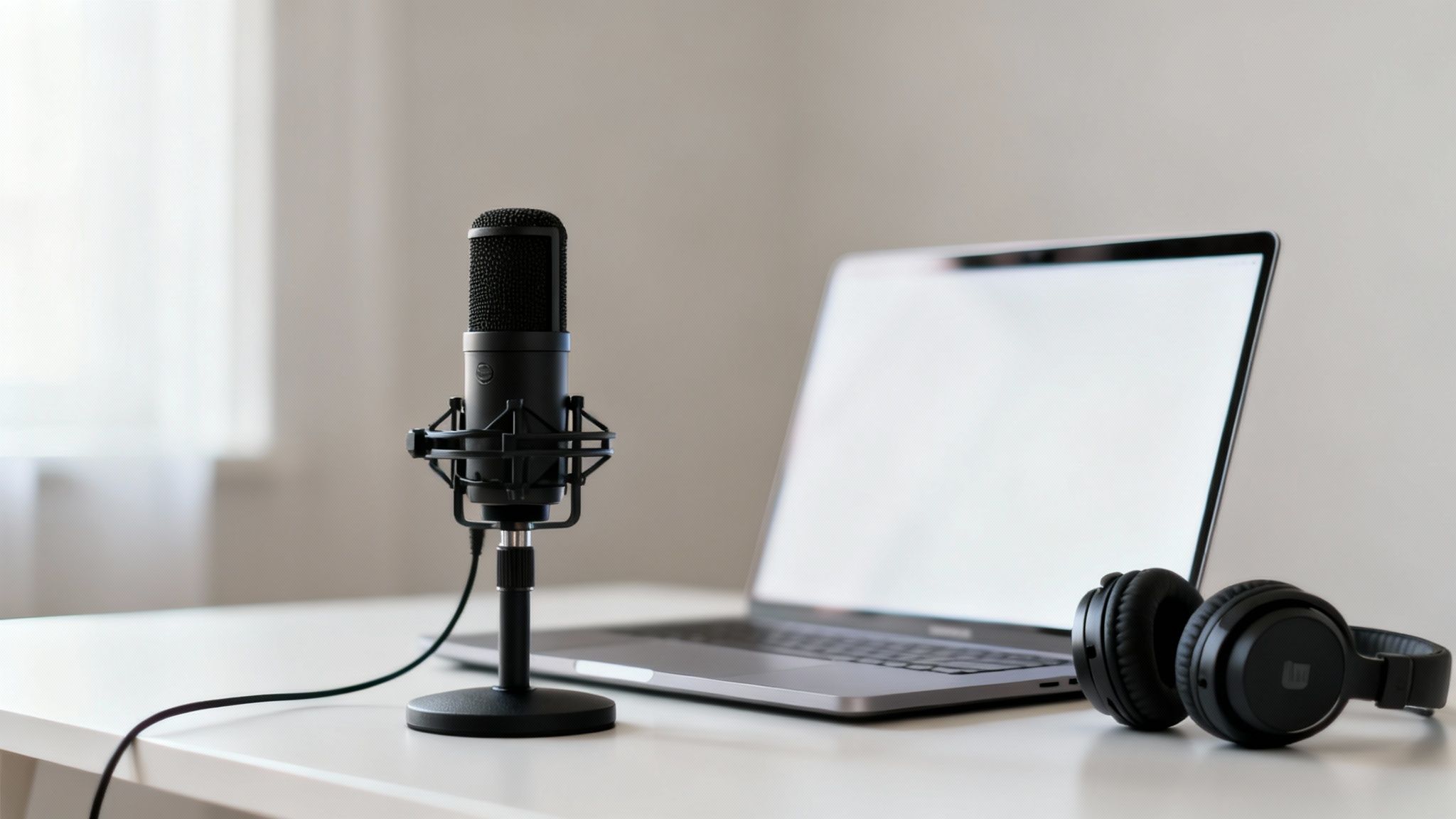
A professional USB condenser microphone setup compared to a standard laptop and headphones.
Presenting Yourself Professionally on Camera
Dressing and Grooming for Video Success
Your appearance during a remote interview creates an immediate impression that extends far beyond technical setup. Research shows that audiovisual quality in video interviews significantly impacts the perceived hirability of job candidates, with impressions formed in a few seconds often correlating closely with impressions formed over several hours [3].
Dress professionally from head to toe, even though only your upper body appears on screen. This complete preparation affects your posture, confidence, and readiness for unexpected situations. Candidates are advised to avoid wearing patterns and overly bright colors during video interviews [9]. Instead, choose solid colors in blues, grays, or earth tones that photograph well and maintain visual clarity. Avoid bright whites that can create glare or all-black clothing that may appear as a dark void on camera.
Groom yourself as meticulously as you would for an in-person meeting. Pay particular attention to hair, ensuring it's neat and away from your face. Remove distracting jewelry or accessories that might catch light or create noise during movement. Professional presentation demonstrates respect for the opportunity and readiness for the role.
Mastering Nonverbal Communication on Video
Your body language speaks volumes during video interviews, often conveying more than your words. Master these nonverbal cues to project confidence and professionalism throughout your conversation.
Look directly at the camera when speaking, not at the screen where you see the interviewer. This creates genuine eye contact that builds connection and demonstrates engagement. Position your camera at eye level to maintain this natural angle without appearing to look down or up at your interviewer.
Sit up straight with shoulders back to project confidence and attentiveness. Good posture signals energy and professionalism while preventing the slouched appearance that can develop during longer conversations. Keep your body centered in the frame, leaving appropriate space above your head.
Use natural hand gestures within the camera's view to emphasize key points, but avoid excessive movement that becomes distracting. Your gestures should feel authentic and purposeful, enhancing rather than overshadowing your message.
Smile genuinely and nod appropriately to demonstrate active listening and engagement. These responsive cues assure your interviewer that you're fully present and interested in the conversation, even through the digital medium.
Following Video Interview Etiquette
Join the meeting 2-3 minutes early to demonstrate punctuality without appearing overeager. This timing allows you to verify your connection and compose yourself before the interviewer arrives. If you join too early, you may create an awkward waiting period that puts unnecessary pressure on your interviewer.
Mute yourself when not speaking to eliminate background noise that can distract from the conversation. Ambient sounds you've tuned out—like air conditioning, traffic, or household activity—become magnified through microphone amplification and can undermine your professional presentation.
Avoid multitasking, looking at other screens, or checking your phone during the interview. Your interviewer can detect when your attention wanders, and divided focus signals disinterest or lack of preparation. Maintain your engagement exclusively on the conversation at hand.
Practice using Zoom Chat appropriately for sharing links or information when requested. Familiarize yourself with this feature beforehand so you can respond smoothly if asked to provide references, portfolio samples, or contact information without fumbling through unfamiliar interface elements.
Try InterviewWhisperer on your next interview
A native macOS assistant that hears the question and answers on your screen — invisible to the screen share. Verify it on your own Mac before you pay.